
Music for a While IX
Quite a lot of late Romantic music here, but also some early and some late modern

Lin (Septidi), 17 Thermidor, CCXXXIV
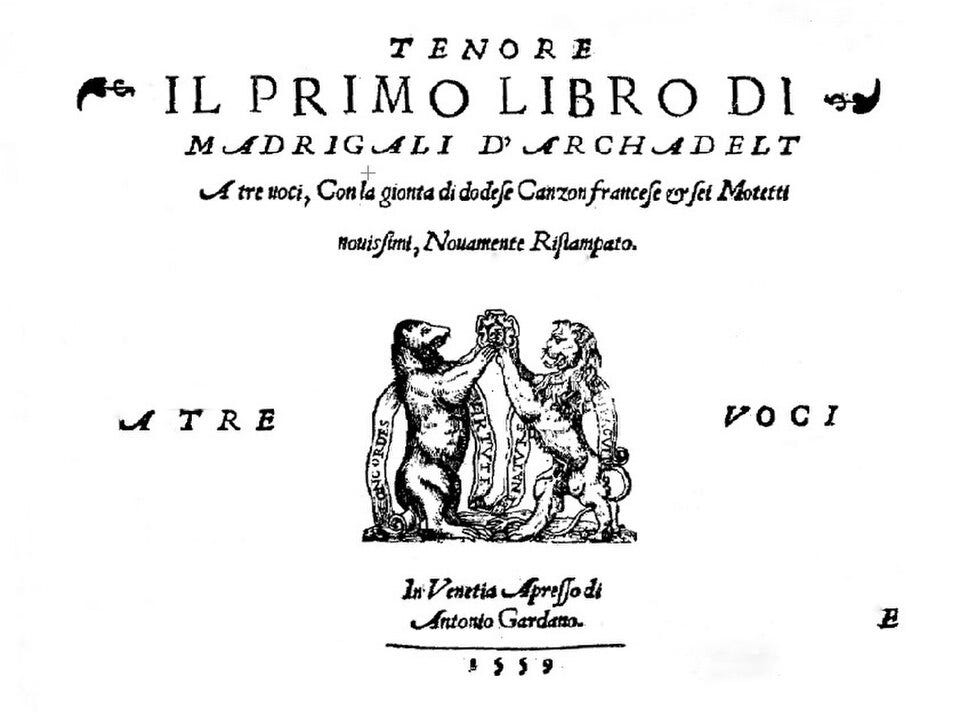
1. Jacques Arcadelt (1507-1568), Missa Noe Noe: Arcadelt is primarily remembered as one of the most significant early composers of madrigals, of which he produced more than 200. His Primo libro di madrigali (he issued five collections in all) was far and away the most popular and influential book of its kind in early modern Western Europe, going through 45 editions and 58 printings over the course of the latter part of the 16th century and early decades of the 17th. It was largely on account of Arcadelt that the madrigal became the common property of the continent. His special distinction, in all his compositions for voice, was as a great synthesizer of styles with a genius for combining the demanding techniques of French and Flemish polyphony (Josquin was a great influence on him) with the flowing melody and rhythms of Italian song. The former is audible in the austere absence of gratuitous chromatic ornament in his madrigals, and the latter in the sustained melodic development; and the ease with which the (as a rule) four voices of the pieces alternate between polyphonic and homophonic passages is one of the conspicuous marks of his compositions. He carried that genius over in numerous ways into the chansons, motets, and masses of his later years. He came by his eclectic leanings quite naturally. Born in the Netherlands, he had established himself in Florence by his early twenties, where he perfected his style before moving to Rome in 1538 to take up an appointment in the Papal Choir, soon thereafter becoming the magister puerorum of the Sistine Chapel. He knew Michelangelo while he was there and set two of the latter’s sonnets to music. In 1551 he moved to Paris to become the choirmaster for Charles de Guise, and in time became a member of the Chapelle Royale of Versailles under both Henri II and Charles IX. His sacred music includes 24 motets, a variety of other sacred settings, and three masses, and I have chosen one of the last of these. The Missa Noe Noe is a ‘parody mass’, which is not to say a lampoon, but rather a mass constructed from thematic materials already in existence, woven into new patterns and new plangencies. It is set for six voices and uses motifs from a motet by Jean Mouton to produce perhaps Arcadelt’s most brilliant fusion of northern polyphony and diatonic Italian harmony, all within the modal system. The structure is especially ingenious in generating, amid the counterpoint, rhythmic convergences of all six voices in rich chords, from which they then diverge again along their several lines of development. Throughout the piece, there is an antiphonal interplay between, on the one side, the altos and the tenor and, on the other, the bass and bass-baritone voices. The recording to get is, as far as I know, the only one available, but also an altogether admirable one: the 2023 Ricerar release with the Choeur de Chambre de Namur and the Capella Mediterranea under the direction of Leonardo García Alarcón.
2. Chen Yi (b. 1953), Symphony no. 2: When last I checked, Chen was still a professor at the University of Missouri in Kansas City, as is her husband, the great Zhou Long. When I first encountered her music, she was on the faculty of the Peabody Institute in Baltimore, which I believe was her first appointment after her studies in composition at Columbia. But, before coming to the States, she had won the distinction of being the first female Master of Arts graduated by Beijing’s Central Conservatory of Music. Though she has also enjoyed considerable international fame as a violinist since her days in her native China, she has been a prolific and celebrated composer for just as long, and one whose remarkable and varied hybridizations of Western and Far Eastern musical traditions, from every period, succeed brilliantly where a lesser artist might have achieved only pastiche. And she has excelled in every form: solo works (especially, naturally, for violin), chamber music, song, choral music, and music for orchestra. Like her husband, she has crafted a world of sound entirely her own from all these forces. I find this work from 1993 to be especially affecting, largely because it puts her genius for discovering new sonorities and tonal textures on full display. It is in one movement, though with four distinct phases, as well as a very brief codetta that neither recapitulates nor resolves what has preceded it, but only invokes a gracious silence. It is a deeply somber work, an elegy in fact, dedicated to the memory of her late father, constructed as a single sustained largo that begins already from a state of profound sorrow and ends with a sense of haunting uncertainty. And it is engrossingly beautiful. The first phase or ‘movement’ is a unison line dominated by the low registers and chordal structures of certain traditional kinds of Chinese song. The second is jarring to some degree, interrupting the flow with percussion figures clearly shaped by classical Chinese opera. In the third, however, this slow but tumultuous transition subsides into a series of solo lines passing through vagrant development, among three instruments: a flute, a clarinet, and a cello. Finally, or almost finally, the more complex orchestral sonorities return, deepening, growing more intricate, interweaving melodic threads that never quite yield a stable pattern, but instead reach a climax in which the intensity of the sadness finds a kind of release. Then comes that codetta, in which the voices of the instruments melt away in ever softer and more diaphanous and dreamlike lines, at the end dying out, as I say, without resolution, as if about to pose a question but not knowing how to phrase it. I am aware of only one recording, but there may be others. In any event, it is a recording I can unreservedly recommend. It appears on a disc entitled The Music of Chen Yi, with the Women’s Philharmonic directed by JoAnn Falletta, which appeared in 1996 from the small New Albion Records label.
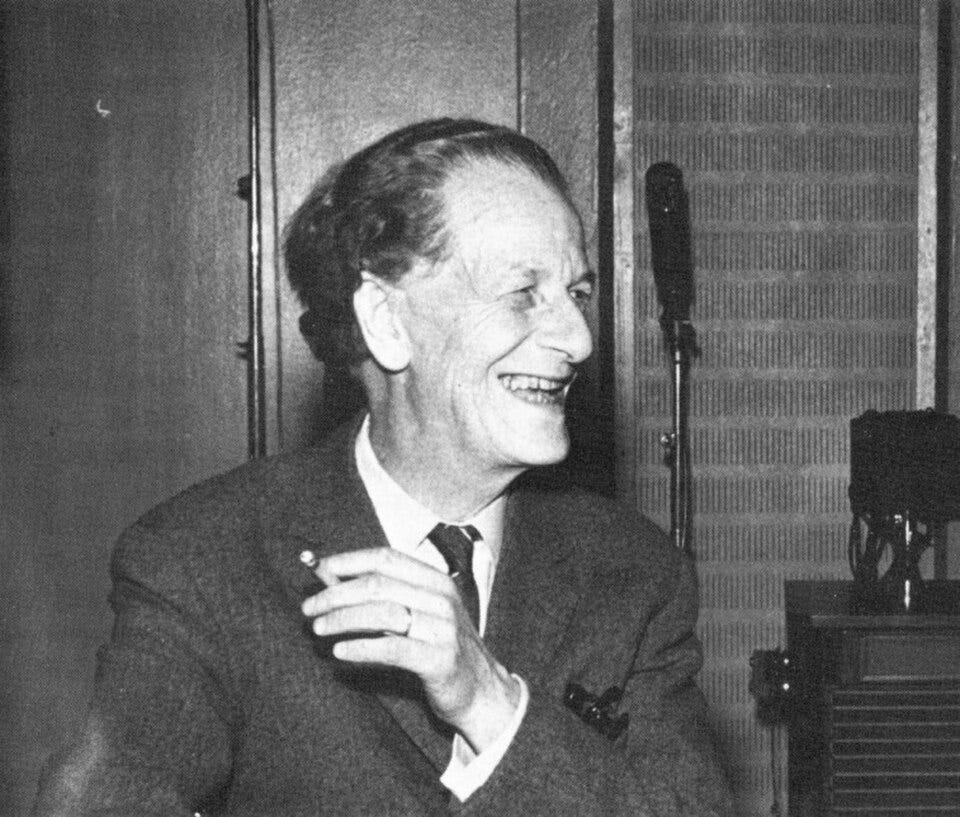
3. Frank Martin (1890-1974), Le Mystère de la Nativité: It seems uncontroversial to call Martin the greatest modern Swiss composer, in part because the field is not exactly crowded, but mostly because of his undeniable genius. I should note, however, that he lived the better part of his adult life in the Netherlands. But he was born and reared among the Alps, the youngest child (out of ten) of a Reformed pastor, and he knew from perhaps the age of nine that music was his vocation. Like Messiaen, his Christian faith informed everything he wrote; and it was through his music that his faith very quickly expanded beyond the particular limits of Reformed tradition. He excelled in every form—orchestral, choral, chamber, solo—and every work was in a sense a theological statement of his decidedly idiosyncratic spiritual vision. This was especially true of his sacred works, of course, which were in some instances constructed on an enormous scale and intended for theatrical presentation. Such is the case with this work from 1959, a staggeringly ambitious masterpiece that was written to be performed as a static spectacle on a stage designed in three tiers—heaven, earth, and hell—with a reserved section of the last of these for the limbus patrum. Martin’s mature idiom was emphatically modern, largely crafted in his own variant of the twelve-tone system, but generously so; he always drew on past ages of musical tradition and a great deal of his special genius lay in his ability to integrate past and present in inventive structures and unexpected accords. Nowhere is that more evident than in this slightly mad music drama. From the strangest of all the late mediaeval mystery plays, Arnoul Gréban’s 15th century Mystère de la Passion, Frank took the idea of presenting the drama as a cosmic tableau vivant, including an almost Job-like (or even Faust-like) heavenly prologue, all played out among the distinct powers of the three spheres. Here, as perhaps nowhere else in Frank’s œuvre, his uncanny ability to interweave and integrate radically different styles of musical development is on full display. The music of heaven is modal, serenely luminous, exquisitely plangent, and constructed on mediaeval and Renaissance models; the music of earth is monodically melodious, diatonic, at times folkish, and touchingly lyrical; and the music of hell is harshly dissonant in tone-color, full of jagged tritones, driven on by violent and convulsive rhythms. But the sounds are not simply set in contrast to one another; again and again, they are brought together in astonishing ways, often by way of diverse motifs sharing the same intervallic structures in a single tone row, producing vastly different effects from tier to tier, but also blending in sonorities and dissonances that, for all their strangeness, never dissolve into mere chaos. There have been a number of fine recordings, and the premiere recording by the Orchestre de la Suisse Romande under the baton of Ernest Ausermet (Martin’s favorite conductor) is justly famous; but the one I want to recommend here is from 2014 on the Musiques Suisses label, performed by the Luzerner Sinfonieorchester and the Mozart-Ensemble der Musikhochschule Luzern, conducted by Alois Koch.
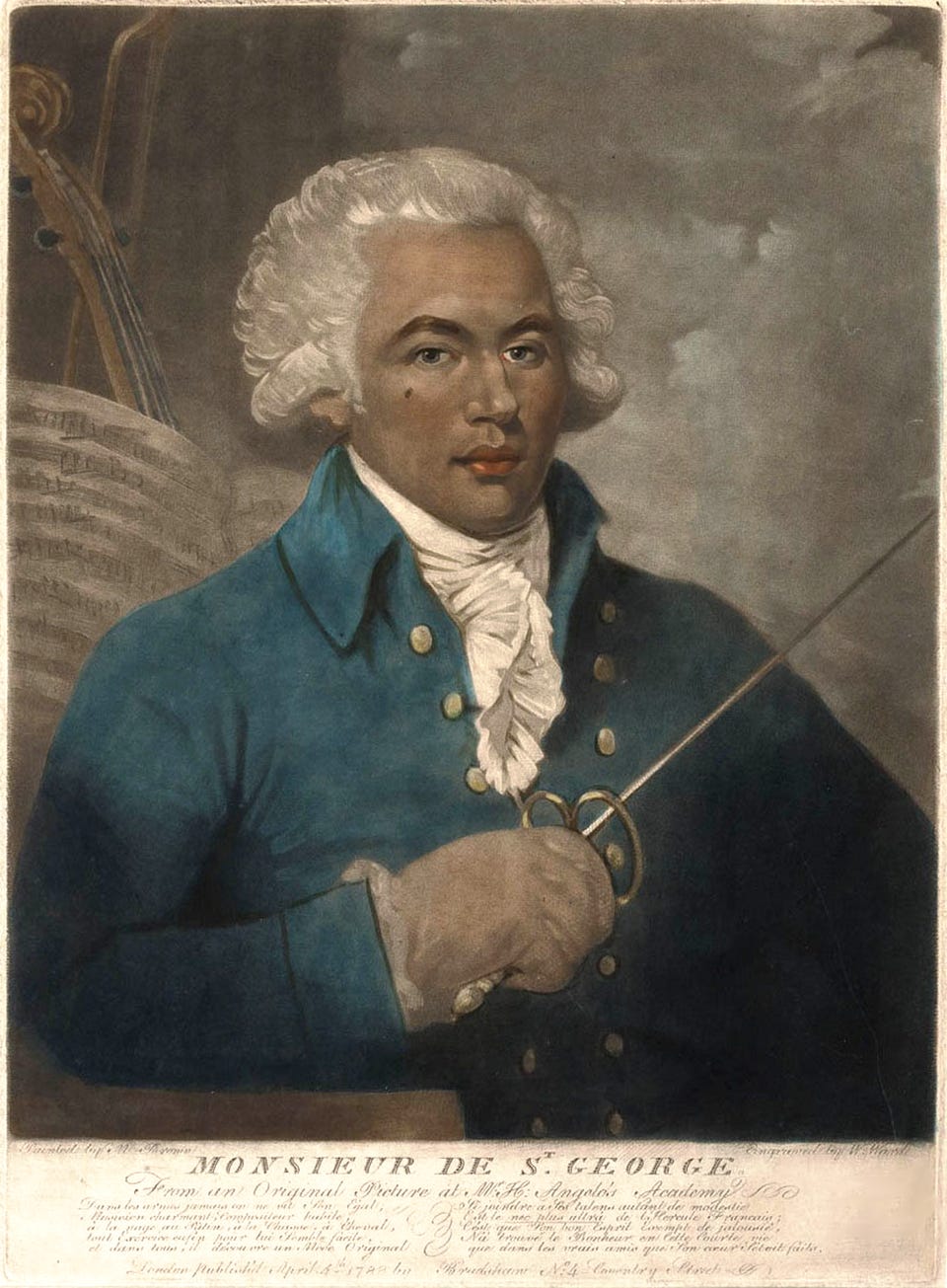
4. Joseph Bologne, Chevalier de Saint-Georges (1745-1799), Violin Concerto in A major: What can one say about the Chevalier de Saint-Georges that is adequate to his legend? Especially given that his legend is entirely true? He was born on Guadeloupe, the ‘natural child’ of the plantation owner Georges Bologne de Saint-Georges and a slave woman named Nanon. He was acknowledged by his father and given the family name, though French law barred him from inheritance by virtue of having been born out of wedlock, and in time he became one of the most accomplished, dashing, and dauntless men of France during the twilight of the Bourbons and the dawn of the Republic. He was only seven when, early in 1753, he was sent to France to begin his formal education, where he excelled in all his studies—not only in violin and musical composition, but also in the aristocratic arts of horsemanship, dance, athletics, marksmanship, and fencing. He was only fifteen when he defeated the somewhat racist fencing master Alexandre Picard in a public match, and by seventeen he was regarded as invincible in the speed, nimbleness, and accuracy of his blade. John Adams met him in 1779 and reported that he could shoot a flipped coin from the air with a pistol. He was also a prolific and charming lover. It was his martial prowess, however, that won him an appointment to the King’s Guard, and it was his virtuosity on the violin that won him fame and the friendship of, among others, Marie Antoinette. He became the conductor of Le Concert des Amateurs in 1773 and briefly director of the Paris Opera in 1776, before the complaints of three lady sopranos who refused to sing under the baton of a black man, as well as the intrigues of a beautiful dancer whose advances he had rejected, forced him to abandon the position. He did for a while serve as conductor of Le Concert de la Loge Olympique, taking the position in 1781, and was praised for the precision he imposed upon the ensemble. It was during this period that he devoted himself to composing operas, symphonies, concerti, sonatas, solo and duo violin pieces, and so forth; after 1785, abruptly, he ceased composing. He fled to England during the revolution, returned to serve the Republic in a legion for ‘citizens of color’, spent a year in prison during the Terror, and then made shift as he might till his death in somewhat impecunious circumstances. What else? Oh, there was the time when half a dozen assassins in the employ of a cuckolded nobleman fell upon him, but he fought them off till the night guard arrived. More impressively, there was the episode of the five brigands who attacked him in England when he was on his way to a public performance, his violin in hand; he disabled all of them quite efficiently and then went on to his concert. Anyway, the stories are too numerous, and we should not let the flamboyance of his biography obscure the excellence of his music. This work is my favorite among his pieces, both for its lyricism and for the extraordinary virtuosity it requires of the soloist (he wrote it for himself, needless to say). It starts with an allegro moderato whose beautifully melodic orchestral prologue establishes four main themes that the violin then works variations upon in a cascade of double-stops, string crossings, and vertiginously ascending registers worthy of Paganini. There follows a largo with a composed cadenza that has one of the most affecting sustained melodic arcs of any concerto of that era. Finally comes a rondeau that brings the whole to a dancing, joyous, elegant, but also extremely intricate conclusion. There are a few fine recordings, but I think the most recent perhaps the best: the 2026 Aparté release from the Orchestre national de Cannes under the direction of Benjamin Levy with Romuald Grimbert-Barré as soloist.
5. Per Nørgård (1932-2025), Gilgamesh: An Opera in Six Days and Seven Nights: When Nørgård passed away last year, one of the titans of modern music vanished from our midst, though the event was barely noticed outside his native Denmark, and probably barely noticed there as well. Few other composers of his time produced as astonishing a body of work. He left behind orchestral music (including eight symphonies), chamber music (including ten string quartets), operas, ballets, choral music, settings for voice, solo music (including some truly exquisite pieces for guitar), and so forth, all of it marked by singular genius. His was, in one sense, what we tend to think of as a quintessentially Scandinavian musical voice, influenced by Sibelius, Nielsen, and Holmboe, often expressing itself in long lines of melodic development and rich sonority. But his was also an extremely personal idiom that, as it matured, became ever more distinctive. He created his own system of serial music based on the mathematical ‘infinity series’, which is to say continuous self-similar integer expansions, though he employed it with considerable flexibility. The technique involved starting from a basic interval that would progressively acquire, through repetition and variation, more and more complex harmonic, melodic, and rhythmic layerings, and the result in his greatest compositions was a music that seems to draw one into itself, as if one is being carried upward into a constantly mounting sea-swell. But I suppose that is all rather vague sounding. In any event, in the early 1970’s, he produced two operas, Gilgamesh and Siddhartha, that to my mind rank extremely high in the late 20th century repertoire, and I have chosen the former, in part—though this does not matter here—because of its magnificently odd staging. Nørgård wrote the libretto himself, drawing from the epic, but also from other sources of Mesopotamian myth, as well at the last from his own spiritual imagination. Hence, it begins with the creation of the world rather than with King Gilgamesh in Uruk, and it ends in a manner I will not give away. The emphasis of the drama is on the depth of Gilgamesh’s friendship with Enkidu, his grief at the latter’s death, his longing for immortality, and his final resignation to the inevitable. But the spectacle of the opera’s performance, with its cast of gods and mortals and beasts and demons, is meant to be positively liturgical, or something of a sacred pageant. The action is not played out on a proscenium stage but rather in the central space of a rectangular auditorium, with the audience seated on either side lengthwise along the walls. All the vocalists and musicians, including the conductor, are in full costume, and no one on the ‘stage’ is without a role in the mystery play. In fact, the conductor represents the sun god Shamash, and he actually orbits the players continuously as the days and nights of the drama elapse. The music is beautiful and entrancing in ways too strange to describe. The infinity series provides its structure, but augmented by the overtone series that governs the melodies, with chromatic rows in constant pitched contrast to diatonic modes, and the rhythms expand and contract, with shifting stresses, according to the golden ratio and the Fibonnaci sequence. Here too description fails. The orchestration is ingenious, especially in its uncanny percussion effects, played by musicians who frequently move through the audience with tuned gongs, shakers, unusual metallic chimes, and even unconventional ‘air percussion’ instruments played by being blown through in rhythmic sequences. Why am I trying to describe this? The recording I recommend is the 1992 Da Capo release, featuring the Swedish Radio Orchestra and Chorus under the direction of Tamás Vető.
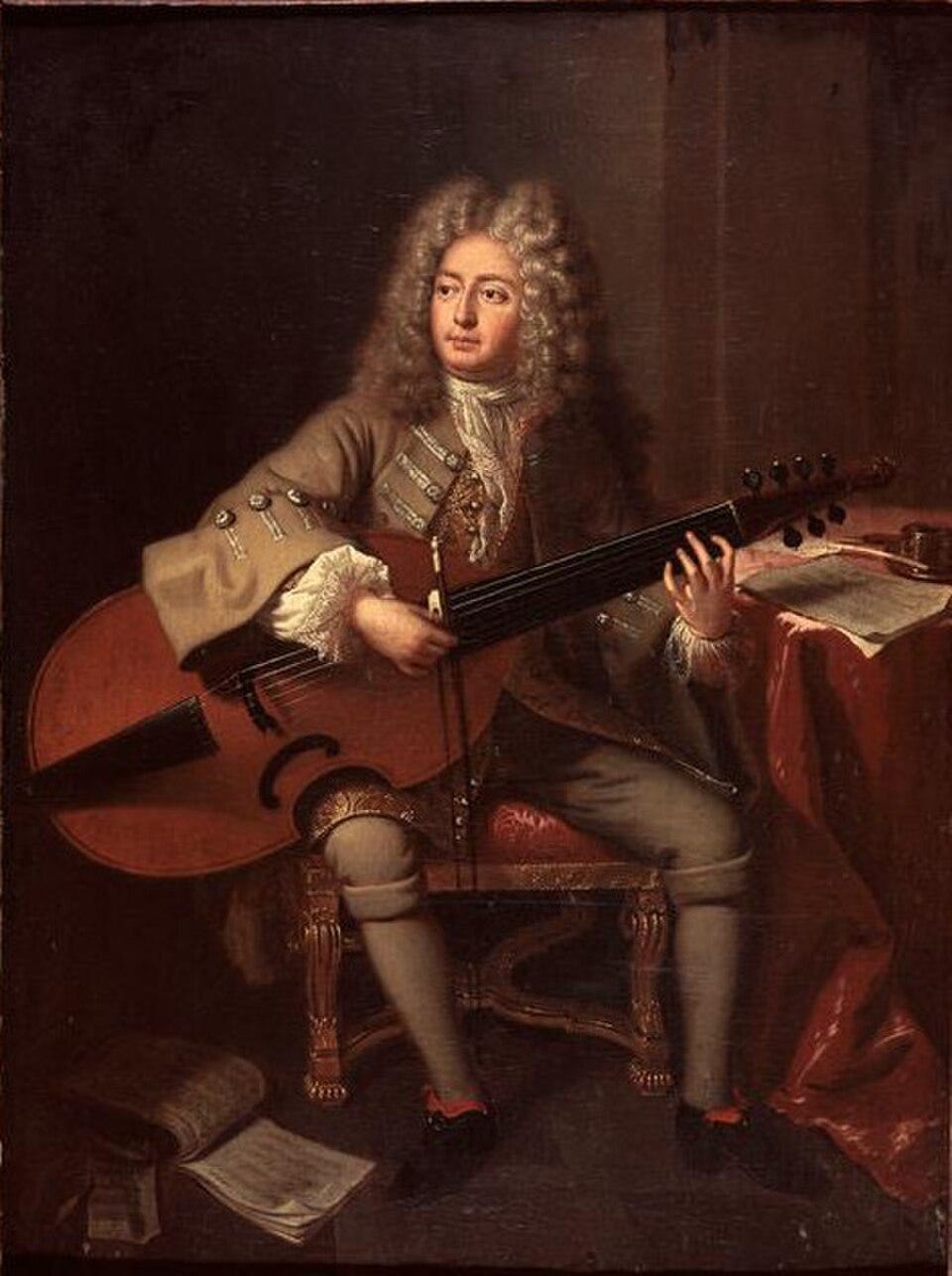
6. Marin Marais (1656-1728), Le Tableau de l’Operation de la Taille and Les Relevailles: Marais, apart from his wholly justified reputation as a composer of great elegance and cleverness in an age that prized the former inordinately and expected the latter as a matter of course, has a place in the history of European music as one of the earliest and most ingenious proponents of program music. He was also a virtuoso of the viol in all its variants who left behind an enormous repertoire written for that instrument in several compendious volumes. In his younger days, he was a student and occasional collaborator with Lully and he produced a small but admirable body of operas, mostly inspired by episodes from Ovid. The greater part of his oeuvre, however, consists in chamber pieces. We know of, but no longer possess, a few sacred pieces as well. He received a court appointment at Versailles in 1676 as a member of the larger ensemble there, but three years later was promoted to Ordinaire de la Chambre du Roy pour la Viole, in which capacity he served until 1725. Again, though, it is the program pieces that make him a distinctive figure among the Parisian composers of his time: Le Labyrinthe, La Rêveuse, Les Voix Humaines, Sonnerie de Sainte-Geneviève du Mont-de-Paris, Plainte, Les Follies d’Espagne (a theme and 32 variations requiring immense virtuosity from the violist), and so on. But the most famous of his programs is that of these two connected pieces from 1725: ‘The Bladder-Stone Operation Table’ and ‘Convalescence’. They provide, I must say, an entirely convincing musical portrait of an agonizing surgical procedure in the days before anesthesia, which Marais himself had undergone at the age of 64. The drama, so to speak, is played out between a viola da gamba, which represents the voice of the patient, and the basso continuo of a harpsichord. The former is especially effective in capturing a scream of pain and a subsequent whimper of exhausted misery. The program notes say it all: “The appearance of the apparatus—tremulousness at the sight of it—the resolution to mount it—the accomplishment of this—getting off again—somber reflections—the binding down of arms and legs with silken cords—making the incision—inserting the forceps—the stone is extracted—the voice dies away in a croak—the flow of blood—the cords removed—being carried to bed…”. The music begins with agitated tremolos and nervous dissonances, the tempo shifting abruptly and violently and the chords becoming more dissonant as blade and forceps do their work; then the tones becoming strained and strident as the patient screams at the écoulment du sang before growing hoarse and weak; and then finally the score descends into calmer intonations as the patient is released and borne to his sickbed on a languid and somniferous major chord. The companion piece then describes, with simple and flowing melodic lines, the gradual release from pain and the soothing restfulness of returning health. It really is a wonderful feat of wordless but expressive narrative and an ingenious use of minimal musical forces. The gold standard of performances is that of Jordi Savall on seven-string bass viol, accompanied by Ton Koopman, originally recorded in 1983 but remastered for the 2011 release on Alia Vox.
7. Hugo Alfvén (1872-1960), Symphony no. 4, “From the Outermost Skerries”: Having now invoked both Nordic orchestral music and musical programs, I might as well continue both themes here. This symphony is not really supplied with a program, admittedly, but neither is it absolute music; rather, it is something of a musical hybrid, part symphony, part tone-poem, evoking a seascape, but employing it really as a depiction of the tides and turbulences of erotic passion. Alfvén was, in his day, one of Sweden’s greatest conductors and violinists, as well as the nation’s most accomplished and obstinately late Romantic composer (he was also a very estimable painter). He remains best remembered for his orchestral music—five symphonies, several tone-poems and program works, his three ‘Swedish Rhapsodies’—though his chamber music, choral works, cantatas, and song settings are firmly ensconced in the national repertoire. This symphony from 1919 is his greatest work, it seems obvious to me. It is certainly the work composed on the most impressive scale and with the greatest unity of structure; but it also contains much of his most inspired and captivating musical invention. He was moved to attempt it on first hearing Nielsen’s Sinfonia Espansiva, and what he accomplished genuinely honored that particular tour de force. Alfvén was always one to luxuriate in gorgeous orchestral colors, using orchestration reminiscent of Richard Strauss’s, but here he was at once at his most opulent in chromatic richness and controlled in harmonic structure. The symphony is also a work for voice, or rather for two voices, though it has no words. A soprano and a tenor portray not the thoughts but the feelings of two lovers drawing together, ascending together to a pitch of ecstasy, and released together into a final calm. Their voices interweave throughout the piece, both with one another and with the instrumental lines, across a vast continuous arc of four movements full of shifting tone-colors. The music definitely reminds one of any number of Scandinavian aural portraits of vast mysterious landscapes, but the vividness and frequent radiance of its orchestration is clearly inspired by Debussy, and its enveloping chromaticism—not to mention its unrestrained eroticism—is altogether Wagnerian and reminds one irresistibly of Tristan und Isolde. The first movement is a thing of mists and waves, surging and tumultuous harmonic layers and vagrant thematic development, with the vocalists almost moaning with yearning. The second, which I suppose could be called a scherzo, is brighter, more ebullient, more excitedly grateful, the orchestration becoming all at once diaphanous, in constantly shifting chromatic layers, especially in the almost antiphonal oscillation between string and woodwind figures. Then comes Alfvén’s finest orchestral achievement, the immense and beautiful and ecstatic third movement, which clearly depicts the consummation of the lovers’ passion, with long melodic lines and flowing depths of harmony undergirding the tenor’s ardent sighs of transport and the soprano’s cry of… well, let’s try to be discreet here. Then the fourth movement arrives, not as any kind of resolution in the classical sense, but in a serene return to the seascape, now with the tempest having passed and the turbulence having subsided into luminous and languid chords descending toward silence. I apologize if any of this has proved too titillating, and I had better leave off here. For my money, the best recorded performance is the 1991 BIS release by the Gothenburg Symphony Orchestra under the baton of… rather, let’s say, conducted by Neeme Järvi.
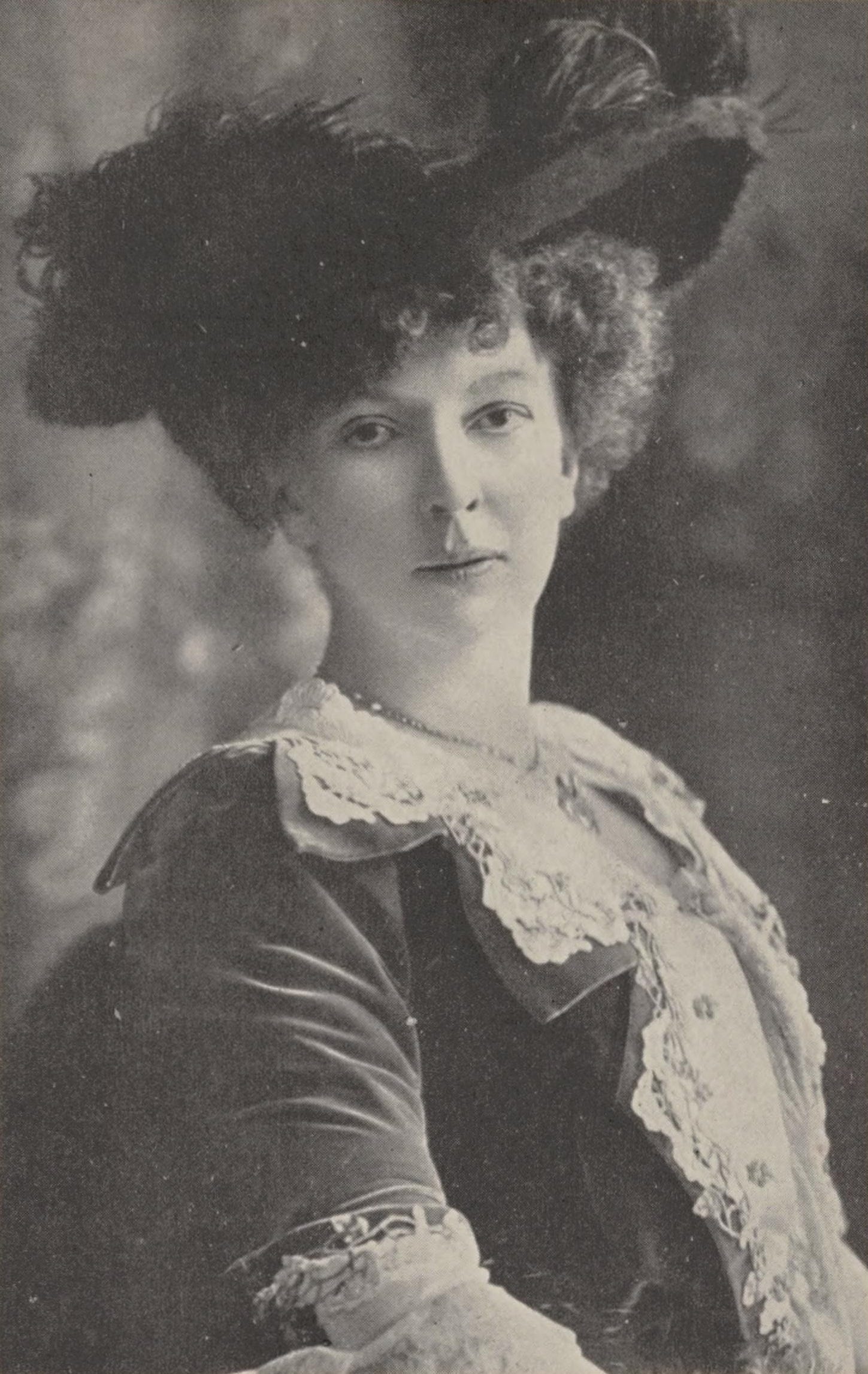
8. Cécile Chaminade (1857-1944), Callirhoë: Ballet Symphonique: Chaminade was extremely popular and celebrated in her day, both as a composer and as a pianist; and the two sides of her fame were inseparable, since in concert she performed only her own music. In 1913 she became the first woman composer ever awarded the Légion d’Honneur. One of the more notable enthusiasts of her music was Queen Victoria, for which reason an organ work by Chaminade was played at the queen’s funeral in 1901. Her piano setting of her own Pas des écharpes (Scarves’ Dance), originally from the work I have chosen here, sold millions of copies. She already had quite a following in France and Britain when, in 1908, she made her first US tour; I will not say that it was quite the equivalent of the Beatles coming to America for the first time, but it was a conspicuous success and definitely something of a sensation. If her fame has dimmed considerably since her day, that is largely because she lived during a period of extraordinary transition in musical forms and idioms and she, even more than other figures who were comparably caught between the late Romantic and modern styles (like Gounod and Saint-Saëns), spoke eloquently to her own time, but well before her death had come to sound to critics somewhat charmingly antique. Then, too, she was a woman, which was never good for anyone’s reputation in the world of ‘serious music’. It is all unjust, given the structural sophistication, imperturbable elegance, but also deeply affecting expressiveness of her music. The only piece of hers that has enjoyed perennial popularity is her Flute Concertino in D major, but everything she composed deserves still to be listened to and admired. She had been a child prodigy, I should note. When she was only 10, no less a virtuoso than Félix le Couppy tried to persuade her father to enroll the child at the Conservatoire de Paris; her father would hear nothing of it, however, on purely social grounds, but he arranged for her to be tutored privately by the conservatory’s faculty. She was taught composition by both Benjamin Godard and Martin Pierre Marsick. In 1869, at age 12, she performed some of her own original music for Bizet, who was profoundly impressed. And, while she came principally to be known for her solo pieces, she enjoyed full command of the entire range of musical forms and forces. I have chosen her sole full ballet score, which premiered in 1888, because it demonstrates at a scale she would never have the opportunity to venture again just how sure that command was. It is quite unlike her salon pieces or even her more flamboyant orchestral works, marked as it is by lavish Romantic orchestration and constant dramatic shifts in tone and tempo. And yet it, like all her music, is unfailingly lyrical, elegant, and wistful. There are no Wagnerian surfeits, though there is a richness of controlled chromaticism that places it in the topography of late Romanticism, somewhere in the vicinity of Bayreuth. The score is built around not recurrent motifs, admittedly, but rather a profusion of melodic phrases. Since the original performances of the ballet, however, the music has survived chiefly in the form of one four-part orchestral suite and one six-part piano suite; but I recommend the entire 21-episode ballet itself. This has been available to us only for about a decade now, ever since it was reconstructed from the original scores by Martin Yates, who is also the conductor on the only complete recording there is, the 2016 Dutton/Epoch release, on which he leads the BBC Concert Orchestra.
*******
Two Notable Recordings:
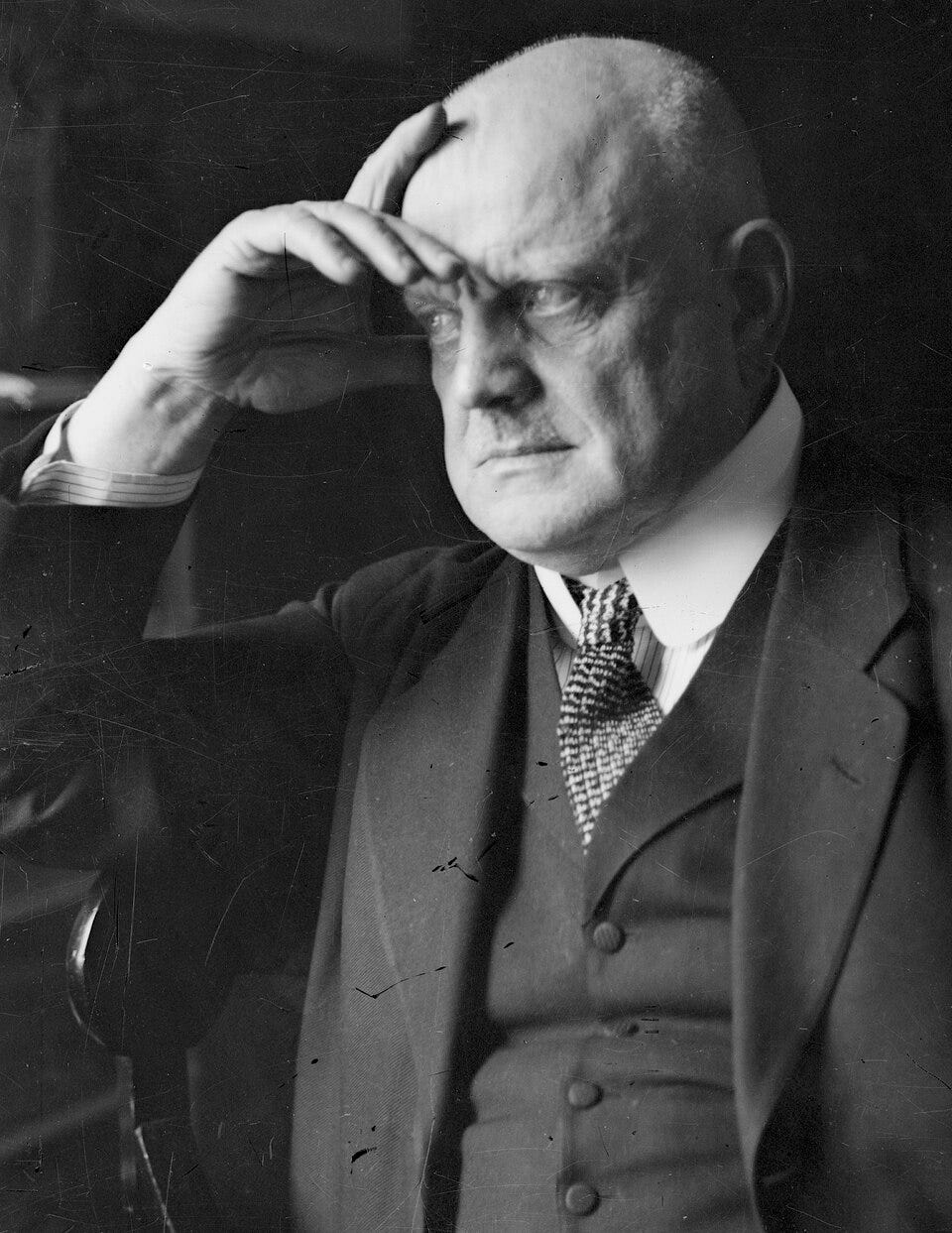
1. Jean Sibelius (1865-1957), Symphony no. 5: During the final 30 years of his life, when Sibelius was no longer composing music but was quite comfortable living on the state pension that Finland had granted him, the most popular of his symphonies tended to be the second, which is of course a captivatingly tuneful and persuasive work. Since then, however, the fifth has won out as the most popular, and it is conveniently and epicentrically placed among his genuinely original and brilliant mature symphonies, which are the third through the seventh. Sibelius’s reputation has, of course, gone through a few curious oscillations; in the mid-20th century, such was his immense popularity among concert-goers worldwide that it was perfectly plausible for Dana Andrews in Laura to tell Vincent Price that the program for the concert that the latter had lied about attending had been switched at the last minute to a night entirely of Sibelius. At the same time, the unapologetic grandeur and (dare we say it) beauty of Sibelius’s music was the target of the unremitting scorn and bile of Virgil Thomson—though I suspect in large part out of Thomson’s resentment at the relative obscurity of his own music. I happen to adore the great Finn (who, like many educated Finns of his time, never learned to speak Finnish very well); I might be more a partisan of the fourth and sixth symphonies, but I am as susceptible to the magnificence of the fifth as any other galoot. Sibelius composed it in 1915 for his 50th birthday, which had been declared a national holiday, but the less indulgent and more austerely monumental version we now all know appeared in 1919, with its three movements all surprisingly in a major key. There are countless recordings of note, but one of which I am especially fond is the 1988 EMI release with Simon Rattle conducting the City of Birmingham Symphony Orchestra. In that performance, the third movement in particular, in its handling of the swelling theme that came inappropriately to be known as ‘Thor swinging his hammer’ (since Thor was not a Finnish god) and of the gigantic resolution in the last few bars is masterful in its rhythmic control and almost shocking abruptness, and since first hearing it I have come to find just about all other versions less compelling.
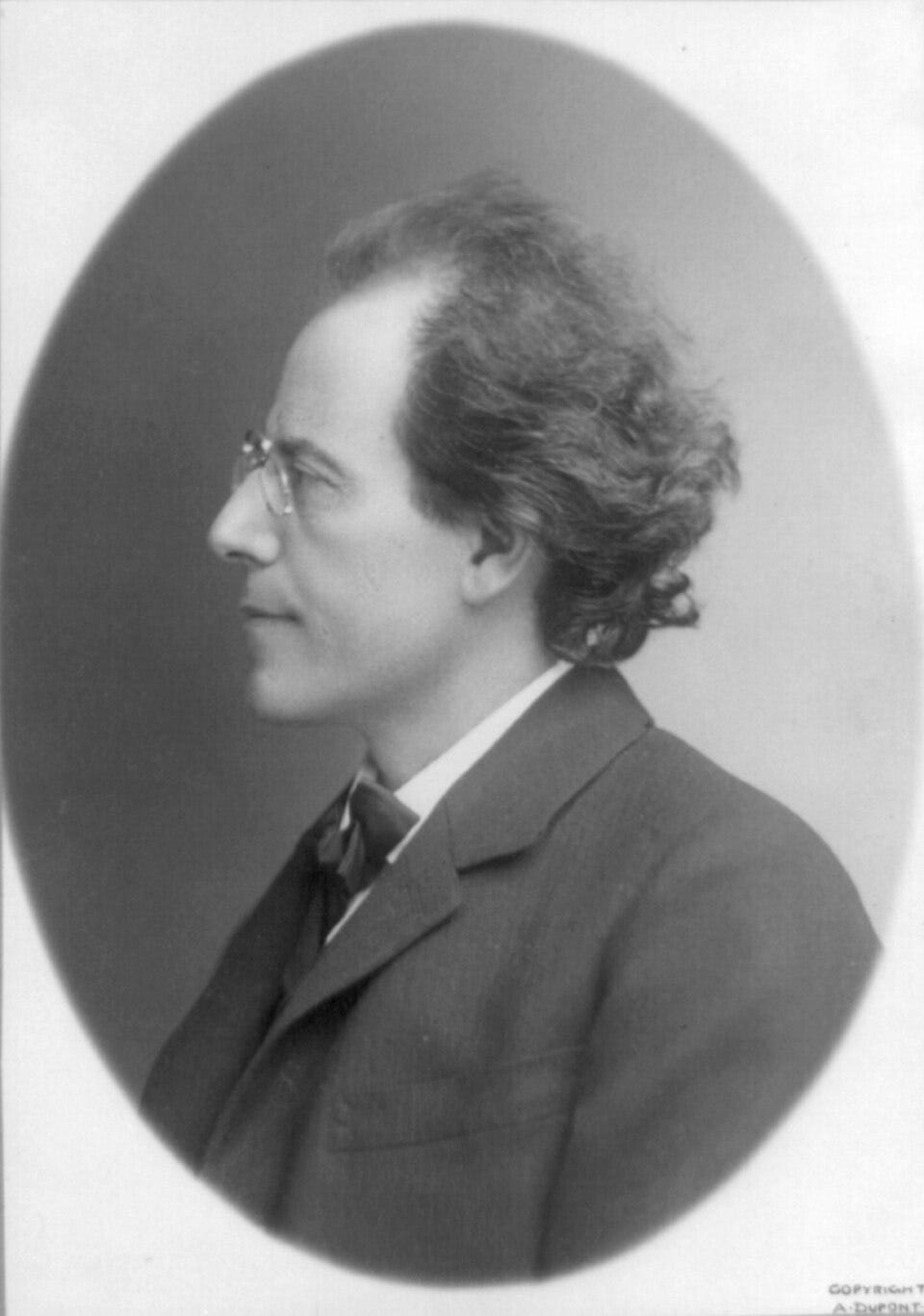
2. Gustav Mahler (1860-1911), Symphony no. 8: What can one say about Mahler that does justice to the sheer insane vastness and temperamental excesses of his most famous works? And what can one say about his eighth symphony—the ‘Symphony of a Thousand’, as it came to be known to Mahler’s great displeasure—with regard to how far it takes that insanity and those excesses? There are few orchestral works or choral works (and Symphony 8 is both) that require such enormous forces, instrumental and vocal, or that employ them in a structure of such spacious design. Mahler had long been fond of combining the vocal and orchestral in his music, but before the appearance of the eighth in 1910 he had produced three purely instrumental symphonies in a row. Here, however, he both returned to his earlier fascination with the heterogeneous form for his large-scale works and established a new pattern for exploring that form, one that would also yield Das Lied von der Erde (a symphony in all but name, because Mahler feared that the mystic symphonic number 9 would precipitate his death, which indeed is precisely what happened when he foolishly cast off his superstition and composed a symphony with just that number). In any event, this gigantic work—built around two choral texts, one the ninth century Pentecost hymn Veni creator spiritus, the other the concluding scene of Goethe’s Faust part two, which says about as much as needs be said about Mahler’s eccentricity—has had many recordings, but none is as justly celebrated as the 1991 live performance by the London Philharmonic Orchestra and Choir, the Eton College Boys’ Choir, and the London Symphony Chorus, all under the baton of Klaus Tennstedt, originally released by EMI but also available now from an LPO 2019 release. Tennstedt manages to extract every last drop of mystic transport from the piece while somehow entirely preventing the stupendous forces at work in the music to escape his control at any point.
Needs more death metal.
Unrelated, but my five-year-old son wanted me to tell you that he liked The Mystery of Castle MacGorilla and that Teddy was his favorite character. We just finished it tonight.